

If you are looking for a real estate lawyer in Sharjah, this guide helps you organise the key questions and documents before agreeing the scope of work. A sale or ownership dispute needs more than a contract review. This guide explains how to organise property records, transaction documents and evidence before assessing the appropriate next step in Sharjah.
For the wider scope, see UAE real estate legal services. This article addresses preparation for a specific matter, not an assessment of an individual file.
Article contents
When should you consult a real estate lawyer in Sharjah?
Start by identifying any mismatch between the agreement and available property documents. The issue may concern a sale, authority, ownership records or performance. Before choosing a claim, identify the property, right, parties and requested outcome. This separates an unanswered question from an established fact.
An official Sharjah Consultative Council publication describes the Real Estate Registration Department’s role in recording ownership, documenting transactions and recording related changes. That supports checking records, but it does not determine the legal effect of your documents. Consulting a real estate lawyer in Sharjah should begin with the actual transaction, not an assumption that all property disagreements follow the same procedure. Relevant official source.
Separate ownership and sale issues from a tenancy dispute
Describe the relationship accurately: a completed property purchase, a resale, an agreement involving a development, a property interest or a landlord and tenant relationship. A dispute involving an apartment is not automatically comparable to another apartment dispute. Location matters, but so do the transaction, the parties and the nature of the request. Procedures used in another emirate should not be imported simply because the contract looks familiar.
Write your objective in concrete terms. You may need to understand a recorded transaction, review a delivery obligation, compare payments with an agreement or assess a sale-related claim. If the issue concerns rent or use under a tenancy, organise that evidence separately. Relationships can overlap, but distinguishing them helps avoid premature conclusions about the appropriate authority or the eventual outcome.
For a broader framework to organise the relationship and records, see preparing a property dispute. Keep that framework separate from assessment of the present request and jurisdiction.
Prepare a practical property document checklist
Start with documents already available. Record the property description and identifier as each document presents them, and note where each copy came from. Keep original documents intact. If copies contain different descriptions, identify those differences rather than silently choosing one version. This preparation checklist is not a universal official requirement.
Create four groups: available ownership documents and plans; the agreement, reservation and amendments; payment and handover evidence; and any power of attorney or authority used by a representative. Include relevant correspondence in context. Mark unavailable records and who may be able to provide them. An incomplete but clearly organised file is more useful than an apparently complete folder that hides uncertainty.
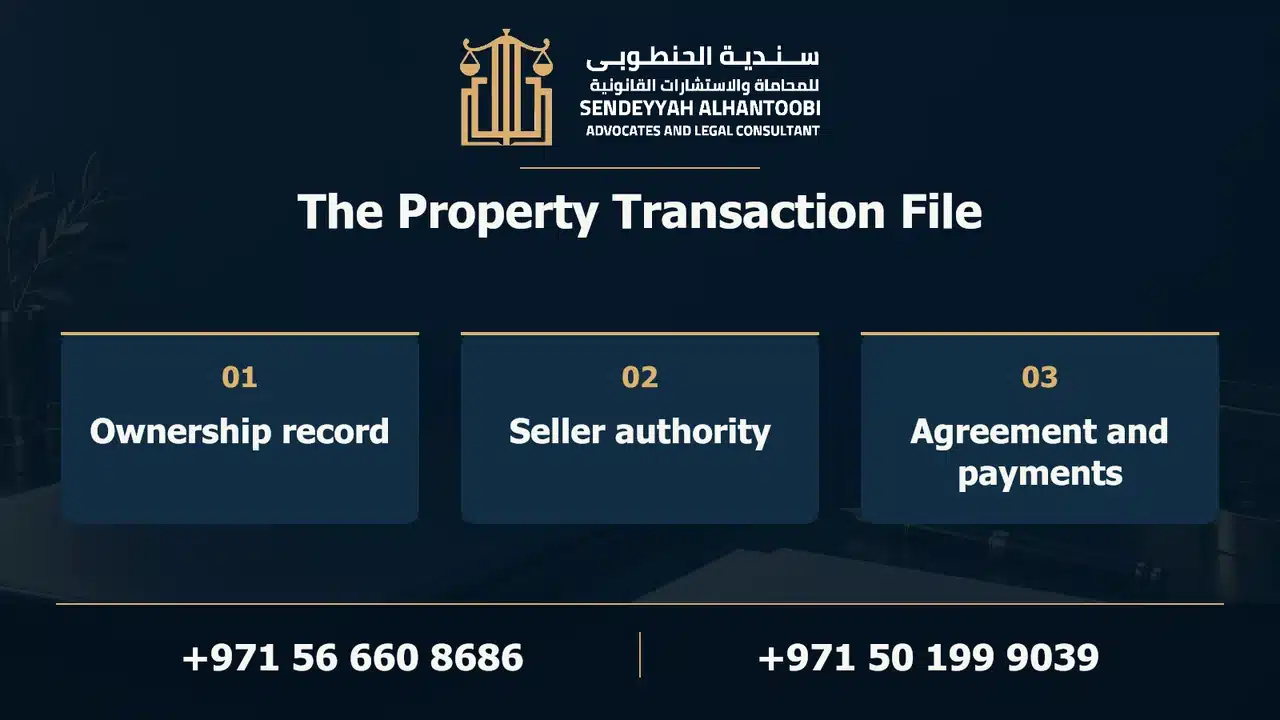
Practical review headings, not a universal official filing checklist:
- Ownership record
- Seller authority
- Agreement and payments
Map the parties and the authority used to act
The person who negotiated may not be the named seller, recorded owner or person signing the agreement. Map the owner, seller, agent, intermediary and buyer, and identify the capacity stated on each document. A name or company stamp in a conversation does not by itself explain the full authority to complete a transaction. A name mismatch does not establish invalidity.
Provide the complete available authority document, not just its signature page. Separate negotiating, signing, receiving payments and follow-up. For a company, retain entity and signatory information privately. These documents identify questions about capacity and scope; appearances alone do not decide them.
Compare records, promises and performance
Use four columns for each relevant event: what the agreement says, what available records show, what happened and what supports it. If descriptions differ, preserve both descriptions. If a document promises a later step, distinguish that promise from evidence that the step was completed. This turns a long conversation into a manageable set of questions.
Arrange payments by supporting documents rather than memory. Connect each message to the event it addresses while retaining the surrounding conversation. Do not discard an inconvenient message or label a transaction fraudulent before an independent assessment. Organising the evidence should produce an accurate account, not a predetermined legal conclusion or a claim assembled by selecting only favourable material.
Hypothetical example: different descriptions of the same unit
Imagine a buyer whose agreement uses a unit name from an advertisement, while a later document uses a different description or number. The buyer also has a payment receipt and a message from someone claiming authority to handle the transaction. This hypothetical example does not show a breach, establish ownership or predict a remedy. The question might involve identification, an incomplete copy, authority or another issue.
Connect the advertisement, agreement, later record, receipt and available authority document. Identify questions rather than guess a claim or forum. A review can identify missing information and possible next steps. This example explains preparation, not the legal outcome of a similar transaction.
Agree useful outputs from the firm’s review
Discuss deliverables that answer your question. Depending on the engagement, these might include a party and document map, a comparison of the agreement with available records, questions requiring clarification and matters needing assessment concerning registration, jurisdiction or representation. These outputs are not a promise that a claim will succeed or that every file requires litigation.
The first useful action may be obtaining a record or clarifying an event rather than filing anything. Agree the scope, who handles communications and the next stage before action is taken. The firm is based in Dubai. UAE-related services are considered according to the relevant professional registration, jurisdiction and agreed engagement; this Sharjah article does not imply a local branch or representation in every matter.
Make a focused enquiry and protect private records
Contact Sendeyyah Alhantoobi Advocates and Legal Consultants with the emirate, property type, your role and a brief description. Ask how to submit documents for the proposed review. Do not publish private records. Explain whether any case or action already exists so the engagement can reflect that context.
This guide is general information, not legal advice or an opinion on a transaction. A real estate lawyer in Sharjah should assess the actual property, right, circumstances and documents within the agreed scope. A hypothetical example cannot guarantee an outcome.
Frequently asked questions
Does signing a sale agreement mean ownership registration is complete?
Do not infer the registration position from a signature alone. The agreement, property and transaction records and applicable framework need assessment to identify what has occurred and what remains, without a universal conclusion for every transaction.
Is an ownership dispute the same as a tenancy dispute?
A property’s description does not determine the relationship. Sale or ownership issues differ from landlord and tenant issues. The parties’ relationship, requests and documents should be assessed before choosing a route.
Do Dubai property procedures automatically apply in Sharjah?
Procedures from another emirate should not be transferred automatically. The property, right, transaction and relevant authority in Sharjah need review even where documents look similar.
What should I prepare when records differ from the agreement?
Provide the different copies, agreement and amendments, payments and complete relevant correspondence. A comparison table should identify each difference and document source. Preserve the records rather than editing them or hiding an inconsistent version.
Official sources and their scope
These references are used within their stated subject. A published service or explanation does not establish applicability to every file. Check the current source and competent authority requirements when assessing a specific step.
Next step
For wider context, see legal consultation for Sharjah matters. Start with a non-sensitive summary, then contact the firm to agree the service and required records. The firm is based in Dubai; scope depends on professional registration, jurisdiction and engagement. This article does not imply a local branch.
This is general information, not legal advice or a legal opinion on a particular matter. It guarantees no outcome; the file and documents need individual assessment.